
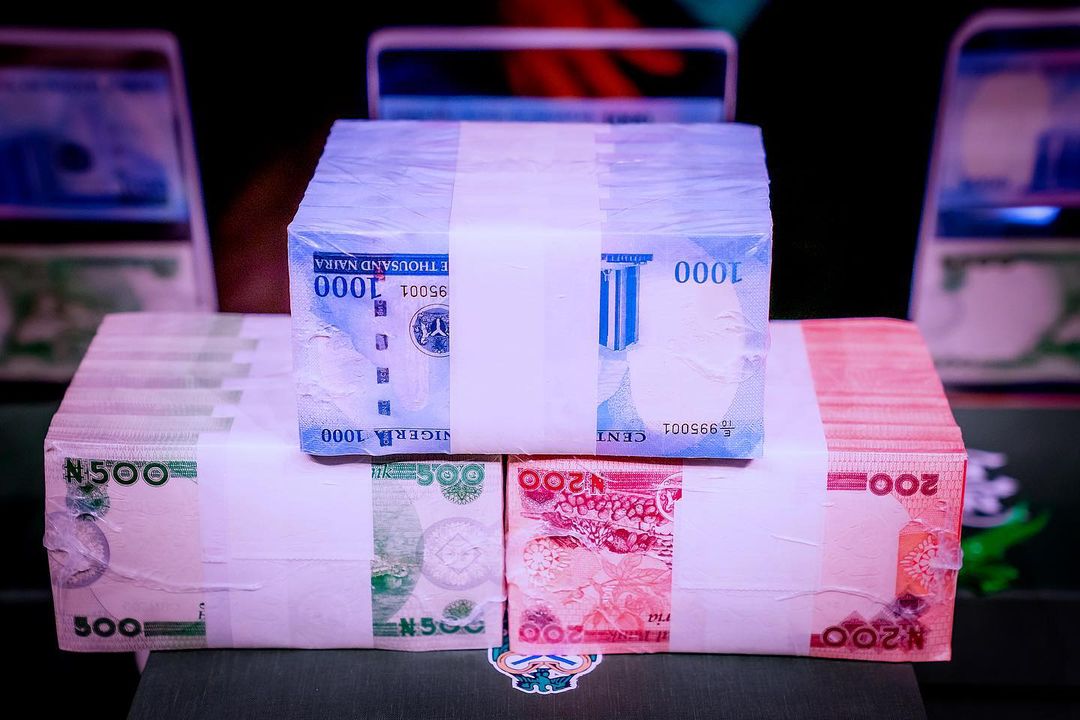
Redesigning the currency is a familiar phenomenon in Nigeria. When the Nigerian government decided to move from using pounds to Naira notes in 1973, this was one of the first things they did. The N20 note was introduced in 1977, followed by the N1, N5, and N10 notes in 1979. The introduction of new Naira notes always followed a period of economic growth and the demand for convenient payment methods. In 1984, however, the colour of the currencies was changed to combat widespread currency trafficking, like that which has been going on recently. N50 note was added in 1991, and on return to democratic rule, N100, N200, N500, and N1000 Naira bills were introduced in December 1999, November 2000, April 2001, and October 2005, respectively. Some Naira notes were later reissued, changed to Polymer, and minted in 2007 and 2009. And in all previous transitions in currency, it has never been as severe as the one we are currently seeing.
The current administration has made a compelling case for a cashless economy, redesigning the naira notes to have greater control over the money in circulation and the need to combat currency hoarding. And Since the exercise’s inception, more than N1.9 trillion Naira have been recovered into the banking system. However, implementing the newly redesigned Naira note has caused Nigerians hardship and the inability to conduct transactions. The difficulty has led to protests and the destruction of properties. Regardless of how beneficial a policy is, it must be appropriately implemented to accomplish its intended result.
So, what went wrong here? How can a lofty notion become the burden of society?
First, consider the impact of politics on policy. Efforts are being made worldwide to protect the central banking system from political meddling. A central bank’s policymaking will be impeded if it becomes an extension of a political party or political philosophy. The problem with the current implementation is the linkage to the 2023 general election. Politicians are indirectly influencing policy direction and, as a result, cause challenges for the system.
Second, the effect of corruption and saboteurs. If the money granted to some financial institutions had been disbursed as intended and POS operators had not turned into opportunists, the problem may have been manageable. The populace is currently round-tripping Naira and stockpiling currency. This creates a compounding problem as currency is no longer flowing, and CBN keeps injecting money into the banks. In the end, it will put more cash into circulation than planned.
Third, the impact of the simultaneous switch to cashless operation and redesign of the Naira currency. This approach significantly strained the IT infrastructure of the financial institutions tasked with supporting the program. Transfers took a lengthy time, and in some instances, the network was down, preventing citizens from accessing their money or cash.
Fourth, incorrect message with an emphasis on cash swaps instead of cashless. Fewer banknotes were produced to move to a cashless system, but most communication has focused on consumers exchanging their old banknotes for new ones. While a cashless economy does not eliminate cash, it does require alternate channels for significant transactions.
Lastly, a general lack of confidence in government policy. Many businesses continue to favour cash transactions over alternate means. Aside from areas like public transportation, which may require time to transition to a digital payment solution, and the tiniest of micro-businesses, most businesses can conduct transactions on alternative platforms.
All of the abovementioned issues contributed to the current problem, and it is feared that people will have difficulty trusting the system once the dust settles. Citizens may likely result to alternate methods for storing and exchanging money outside the banking sector.
How can the CBN and government regulate the situation without risking cashless benefits and monetary control?
A few adjustments will go a long way toward alleviating misery and regaining control of the system.
In the short term,
1. Cash sales at POSs should be restricted or temporarily prohibited. They collaborate with some agents to extort the people and are a part of the problem.
2. The CBN should produce and push out more N200, N100 and N50 notes with a daily withdrawal limit. This will go a long way in ensuring that individuals can conduct everyday transactions.
3. The messaging should transition to utilizing alternate channels and ensuring that all stakeholders in this arena work together to resolve the issues that have arisen over the previous few weeks.
4. Law enforcement agents must support the CBN in monitoring and enforcing the implementation.
Long-term, the Naira must be redesigned within the next eight years, but it must be appropriately executed this time.
The focus should first be on implementing the cashless policy and getting people onto multiple platforms. Then it can be followed by another redesign of N1000, N500, and N200. This will compel those currently being hoarded to return to the banking system.
Then, N1000 and N500 should gradually be limited or withdrawn from circulation. The top currency in circulation should be N200 to promote other electronic platforms.
Transaction fees on all electronic platforms must be regulated to prevent extortion and promote widespread adoption.
In conclusion, the government must restore faith in the financial system. As a result, crucial monetary policy decisions should be avoided during general election cycles, and monetary policy should be delinked from politics.

