
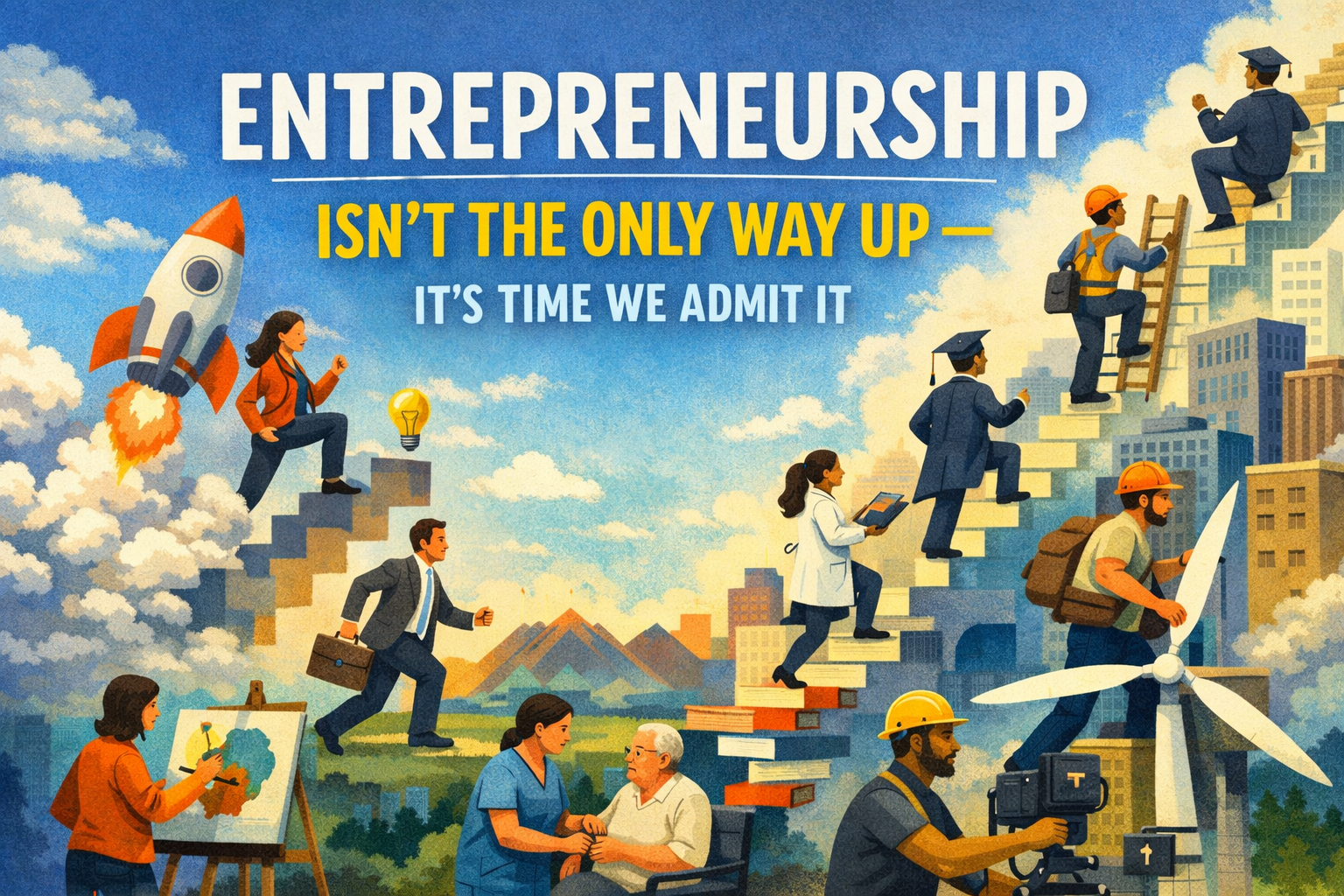
Entrepreneurship has been the buzzword for years. The loudest voices in the room have insisted that it’s the only true path to success. Starting a business, building a unicorn, or becoming your own boss is an appealing story that captures the imagination. Many have left their careers behind to go solo, and with a few success stories under their belt, it’s easy to see why this idea spreads so quickly. Governments also jumped on the bandwagon to tackle unemployment, even going as far as introducing entrepreneurial subjects into the educational curriculum and encouraging graduates to engage in activities that often can be considered low-value. However, this perspective is ultimately too narrow, leading to unintended consequences for workforce development and failing to fully capture what real success looks like.
The reality is that not everyone will launch a startup — and not everyone should. Some of the most successful and fulfilled people you’ll ever meet never founded a company. They built meaningful careers inside organizations that recognized their talent, rewarded their contributions, and gave them room to grow. Yet somehow, we’ve allowed the narrative to shift so far that choosing a career path is treated like settling for less.
Entrepreneurship has been romanticized to the point where traditional career growth is undervalued. But a well‑built career can be a powerful engine for wealth and freedom. It can offer stability, mentorship, structured development, competitive compensation, and even equity. It can give you the space to master your craft without the constant pressure of fundraising, payroll, or existential risk.
The real distinction isn’t between founders and employees. It’s between people who create value and people who simply occupy space. You can be entrepreneurial inside a company — spotting opportunities, leading initiatives, solving problems others avoid, and becoming indispensable. That mindset is often more impactful than launching a business you’re not prepared to sustain.
What we should be encouraging is not a mass exodus into entrepreneurship, but a smarter approach to career building. Develop rare skills. Choose environments that reward performance. Negotiate with confidence. Invest consistently. Think like an owner, even if you’re not the founder.
Success has many routes. Entrepreneurship is one of them, but it’s not the only one — and for many people, it’s not even the most effective. It’s time we normalize the idea that you can be ambitious, wealthy, fulfilled, and influential without ever starting a company. A strategic career isn’t a fallback plan. For countless people, it’s the smartest path forward.

